|
Pan American Experiences
|
------- |


Hemisphere Related Articles:
Visit Mysterious Geoglyphs and Ancient Ruins Across South America
America’s Most Expensive Road Does Not Protect Any Real Border
|
HEMISPHERE ------------------------------------------1109[COLUMN] | |||
Venezuela’s EarthquakeA First Test for the Donroe DoctrineBy Christopher Engholm for Ruta Pantera on 6/26/2026 10:30:37 AM |
||||
| On Wednesday, June 24, Venezuela was shaken by two consecutive earthquakes — magnitude 7.2 and 7.5 — the most devastating seismic events the country has experienced in more than a century. At least 188 people were killed, nearly 1,000 were injured, and the coastal state of La Guaira was declared a disaster zone. | ||||
|
Buildings collapsed in Caracas, Simón Bolívar International Airport is closed, internet services are disrupted, and hospitals have been pushed beyond their limits. A country already facing deep political and economic challenges is now confronted with its worst natural catastrophe in generations.
Enter Donald Trump “America is ready, willing, and able to help!” he wrote on Truth Social. He promised search-and-rescue teams, humanitarian assistance, and logistical support. Secretary of State Marco Rubio announced that the Department of War would play a central role in the response. Trump referred to Venezuelans as “our new and great friends.” The question being asked across the hemisphere now is whether this assistance will arrive, and what price will come with it. A Doctrine With a Name To understand what is happening in Venezuela, it is necessary to look back six months. On January 3, 2026, U.S. forces carried out Operation Absolute Resolve: the first bombing of a South American capital since World War II. Nicolás Maduro was captured at Miraflores Palace and transferred to U.S. territory. Trump described the operation as a historic victory and stated that the United States would “administer” Venezuela during a transitional period. What followed was the announcement of what Trump called the “Donroe Doctrine” — a fusion of his surname with the Monroe Doctrine of 1823. The U.S. State Department published a message on X that deserves to be repeated in its starkest form: This is OUR hemisphere. “The dominance of the United States in the Western Hemisphere will never again be challenged.” — Donald Trump, January 2026 This is not merely political rhetoric. It represents an official strategic vision. The new U.S. National Security Strategy explicitly incorporates what has been described as the “Trump Corollary” to the Monroe Doctrine, asserting Washington’s right to control access to key geographic areas in the hemisphere, limit the influence of outside powers — particularly China — and intervene where it considers necessary. Oil In the Room None of this is happening in isolation. Venezuela holds the largest proven oil reserves in the world. Since Maduro’s capture, the Trump administration has gradually expanded its control and influence over Venezuela’s oil sector. In January, interim president Delcy Rodríguez — appointed by Maduro’s own government — signed legislation designed to facilitate foreign private investment in the oil industry, estimated at $8 billion. Trump publicly celebrated that the military operation lasted “exactly 48 minutes” and claimed that the United States had recovered its costs 28 times over through crude oil extraction. In March, Washington reopened its embassy in Caracas, and both countries signed an agreement allowing the United States to trade 50 million barrels of Venezuelan oil as part of a three-phase normalization plan. That is not to be viewed as cooperation; it is concession making under pressure. “They have openly talked about controlling Venezuela’s oil reserves,” said Senator Bernie Sanders in January 2026. “This is pure imperialism. It evokes the darkest chapters of U.S. intervention in Latin America.” — Senator Bernie Sanders, January 2026 The Trap of Conditional Aid Humanitarian logistics experts are already warning about the challenges ahead. Sarah Schiffling of Finland’s HUMLOG Institute has noted that the main concern is not only whether assistance will reach those who need it — a difficult task given sanctions and damaged infrastructure — but whether the disaster will be used by the United States to deepen its influence over Venezuela. History provides reasons for suspicion. The original Monroe Doctrine of 1823 sought to prevent European powers from expanding their influence in the Americas. The Roosevelt Corollary of 1904 expanded that interpretation, allowing U.S. intervention in Latin American countries considered unable to maintain stability or fulfill international obligations. That logic was used to justify interventions in Haiti, Nicaragua, Cuba, and the Dominican Republic. Decades of foreign involvement left political scars across the region that have never fully disappeared. Trump has not only revived this logic; he has expanded it. He has threatened Colombia, Cuba, and Mexico with consequences similar to those faced by Venezuela. He has expressed interest in annexing Canada and Greenland and has demanded greater control over the Panama Canal. Michael Cullinane, director of Theodore Roosevelt studies at Dickinson University, summarized the approach precisely: “What was missing in Venezuela was the ‘speak softly.’ Trump did not pursue diplomacy before using the big stick.” The Ultimate Test The Venezuelan earthquake may become, perhaps unintentionally, the most revealing test of Trump’s foreign policy toward the hemisphere. If assistance arrives without political conditions, with transparency, and through genuine multilateral coordination, there will be an argument that Washington is exercising something closer to regional responsibility. But if aid becomes linked to new oil concessions, investment agreements, or the silence of a transitional government with little room to refuse, then it will reinforce what many critics already suspect: that the “Donroe Doctrine” is, at its core, a policy of extraction wrapped in the language of liberation. Before the earthquake, the U.S. Council on Foreign Relations had already described the direction of Trump’s policies in blunt terms: “In practice, Trump’s policies smell of neo-imperialism, not neo-isolationism.” Latin America has seen this story before. The region knows what can happen when a powerful neighbor arrives during a crisis with one hand extended and the other reaching toward natural resources. The difference this time is that the entire world is watching. And Venezuela — vulnerable, devastated, and lacking full political autonomy — may have little ability to reject whatever comes next. That is the tragedy within this tragedy. |
||||
 Add this article to your favorites
[FOR MEMBERS ONLY]
Add this article to your favorites
[FOR MEMBERS ONLY]
Copy this link to send this article to a friend: [FOR MEMBERS ONLY] |
||||
|
|
||||
|---|---|---|---|---|
| |
|
|
|
|
×
|
||||
Please leave a comment about this article: 1109 |
|
| Enter your email address: |
Your email will not be displayed. |
| Your nickname: | |
| Your comment: | |
| Was this article helpful to you? | |
|
|
|
Articles about exciting travel experiences in our hemisphere.
ADVENTURE
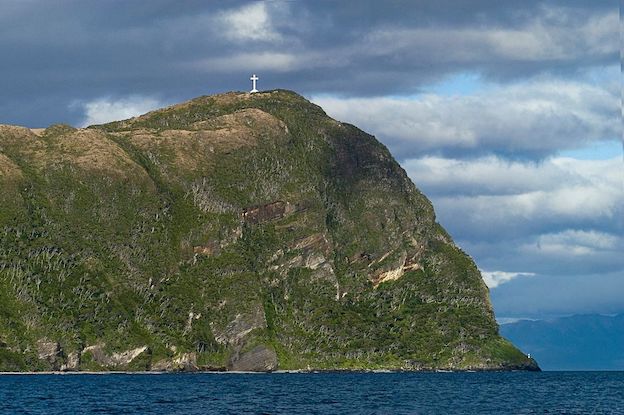
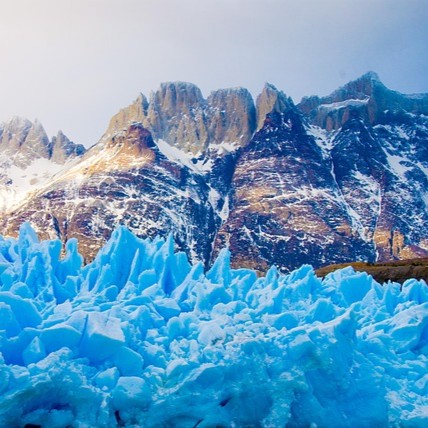
Cape Froward, Chile
BEACH & SUN

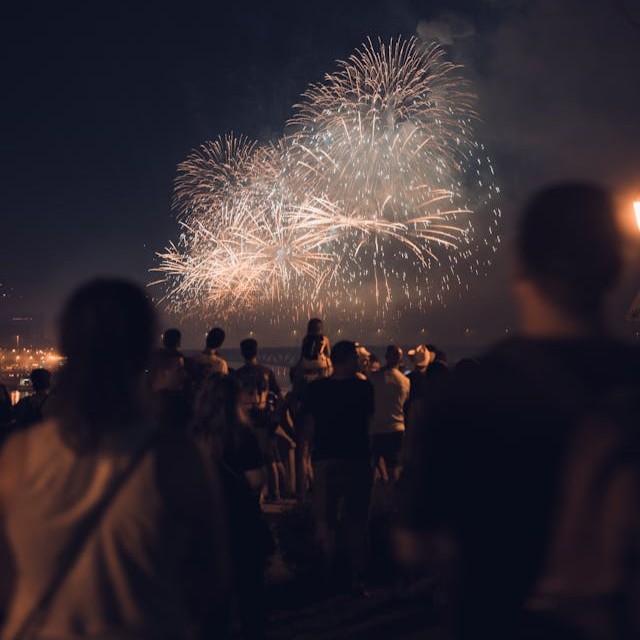
Welcome to the World’s Largest New Year’s Celebration
For those traveling from North, Central, or South America, New Year's Eve in Rio offers a rich narrative about how a city can transform a universal holiday into a unique celebration, rooted in local traditions and open to the world.










|
Experiences Finder
(Search our catalog of Experiences here.) |
|---|