|
Pan American Experiences
|
------- |

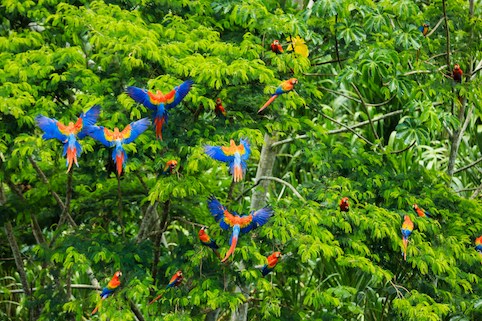
If the forest benefits the entire planet, who should pay to take care of it? Photo by Dylan Shaw on Unsplash.
|
HEMISPHERE ------------------------------------------1335[FEATURE] | |||
Protected Amazon, Unprotected RainforestWhen Maps Promise Conservation, but There isn't Enough Money to Protect the ForestBy Estefanía Muriel for Ruta Pantera on 6/9/2026 2:53:39 PM |
||||
| big>I remember a dawn on the Putumayo River. The mist floated on the water like a living skin, and from the riverbank, the forest seemed endless. Yet a park ranger pointed out something invisible from a distance: a recently opened trail, dug by illegal miners. “The problem isn’t that the area isn’t protected, ” he said. “The problem is that no one has a way to get there.” That sentence sums up one of Latin America’s greatest environmental challenges: the difference between declaring a territory protected and actually protecting it.
A study published in 2026 by Helenilza Cunha and her colleagues at Cambridge University Press & Assessment reveals a troubling reality. Although Brazil has one of the most extensive protected area systems in the world, 72% of its federal units received fewer resources than needed to operate adequately. The accumulated deficit reached US$958 million in 2023, and the situation is particularly dire in the Amazon, where protected areas received barely a fifth of the minimum funding required. Of the 122 Amazonian areas analyzed, 120 fell below the basic operating threshold. The consequences are as tangible as the sound of a chainsaw in the distance. Less funding means fewer park rangers, less fuel for boats, less satellite monitoring, and a reduced capacity to respond to fires, land invasions, illegal logging, or clandestine mining. In vast territories, this operational absence transforms millions of hectares nominally protected into spaces vulnerable to the advance of illegal mining, drug trafficking, and deforestation. Protection exists on paper; on the ground, it is often merely an intention. The Political Geography of Conservation The paradox emerges when we look at where the money goes. As Mongabay News pointed out, protected areas near urban centers or with strong tourist appeal tend to receive more resources than remote areas that store enormous amounts of carbon and biodiversity. This isn't necessarily because they are more ecologically important, but because they are more visible to governments, voters, and visitors. The Brazilian case illustrates a tension shared by much of the hemisphere. In Colombia, Ecuador, Peru, and Bolivia, the most visited parks tend to attract public attention and economic opportunities, while remote Amazonian reserves continue to rely on insufficient budgets. Tourism generates valuable income, and according to data from the Chico Mendes Institute, Brazilian protected areas contribute billions of reais to the national economy. However, the tourism model can hardly sustain remote areas whose primary value lies in maintaining intact forests and stable climate cycles. Research published in the Proceedings of the National Academy of Sciences shows that the availability of funding is one of the most decisive factors for the performance of Latin American protected areas. Paradoxically, the most biodiverse countries tend to be those with the least fiscal capacity to sustain that natural wealth. |
||||
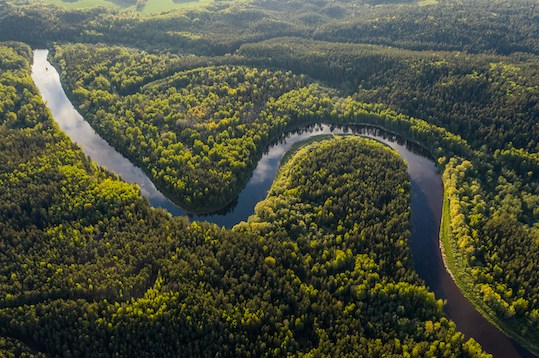
A patrol boat travels along an Amazonian river through protected forests. Photo by Ivars Utināns on Unsplash. |
An Ecological Debt that Transcends Borders
The Amazon rainforest produces rainfall that nourishes crops, stores carbon that helps moderate the global climate, and sustains irreplaceable biodiversity. However, much of the cost of conserving these services falls on the Amazonian countries. Studies estimate that keeping approximately 80% of the Brazilian Amazon protected would require between US$1.7 billion and US$2.8 billion annually, a figure far exceeding currently available resources, according to the article "Minimum costs to conserve 80% of the Brazilian Amazon" by Silva et al. (2022). This raises an uncomfortable question. If the climate benefits are global, why does the financial responsibility remain largely national? International funds, green bonds, and programs like ARPA or the Amazon Fund have proven useful, but they continue to fall short of the actual needs. The global funding gap for protected areas continues to tell a story of promises faster than disbursements. Brazil, Colombia, Peru, Ecuador, and Bolivia share a common lesson: effective conservation depends less on the number of lines drawn on a map than on the ability to sustain it year after year. Some mechanisms, such as payments for ecosystem services, debt-for-nature swaps, and certain environmental bonds, show promising results. Others remain more rhetoric than real transformation. In the end, as the river continues to flow beneath the Amazonian mist, the question remains open. Are we willing to pay for the forests before we lament their loss? Perhaps the true measure of our commitment to nature is not how many areas we declare protected, but how much we are willing to invest to ensure they continue to thrive. |
|||
 Add this article to your favorites
[FOR MEMBERS ONLY]
Add this article to your favorites
[FOR MEMBERS ONLY]
Copy this link to send this article to a friend: [FOR MEMBERS ONLY] |
||||

|
|
||||
|---|---|---|---|---|
| |
|
|
|
|
×
|
||||
|
References: Cunha, H. F. A., Barbosa, L. C. F., Cunha, A. C., & Silva, J. M. C. (2026). Chronic underfunding of protected areas in a megadiverse country: Spatial, temporal and socioeconomic patterns from Brazil. Environmental Conservation. Cambridge University Press. https://www.cambridge.org/core/journals/environmental-conservation/article/chronic-underfunding-of-protected-areas-in-a-megadiverse-country-spatial-temporal-and-socioeconomic-patterns-from-brazil/522AAE25A1AC7A91667CCCFAB7FCE7DB Butler, R. A. (2026, mayo 26). Brazil has protected much of the Amazon. It now has to pay for it. Mongabay. https://news.mongabay.com/2026/05/brazil-has-protected-much-of-the-amazon-it-now-has-to-pay-for-it/ Lessmann, J., Geldmann, J., Fajardo, J., Muñoz Brenes, C. L., Bonaccorso, E., Bruner, A., Burgess, N. D., Coad, L., Cuadros, I. C., de Groot, R., Leverington, F., Nolte, C., Oliveira, P. J. C., Pacheco, J., Peres, C. A., Pfaff, A., Strassburg, B. B. N., & Marquet, P. A. (2024). The role of funding in the performance of Latin America’s protected areas. Proceedings of the National Academy of Sciences, 121(36), e2307521121. https://doi.org/10.1073/pnas.2307521121 Silva, J. M. C., Barbosa, L. C. F., Topf, J., Vieira, I. C. G., & Scarano, F. R. (2022). Minimum costs to conserve 80% of the Brazilian Amazon. Perspectives in Ecology and Conservation, 20(3), 216–222. https://doi.org/10.1016/j.pecon.2022.03.007 Coad, L., Watson, J. E. M., Geldmann, J., Burgess, N. D., Leverington, F., Hockings, M., Knights, K., & Di Marco, M. (2019). Widespread shortfalls in protected area resourcing undermine efforts to conserve biodiversity. Frontiers in Ecology and the Environment, 17(5), 259–264. https://doi.org/10.1002/fee.2042 Lessmann, J., Geldmann, J., Fajardo, J., Muñoz Brenes, C. L., Bonaccorso, E., Bruner, A., Burgess, N. D., Coad, L., Cuadros, I. C., de Groot, R., Leverington, F., Nolte, C., Oliveira, P. J. C., Pacheco, J., Peres, C. A., Pfaff, A., Strassburg, B. B. N., & Marquet, P. A. (2024). The role of funding in the performance of Latin America’s protected areas. Proceedings of the National Academy of Sciences, 121(36), e2307521121. https://pmc.ncbi.nlm.nih.gov/articles/PMC11388404/ |
||||
Please leave a comment about this article: 1335 |
|
| Enter your email address: |
Your email will not be displayed. |
| Your nickname: | |
| Your comment: | |
| Was this article helpful to you? | |
|
|
|
Articles about exciting travel experiences in our hemisphere.
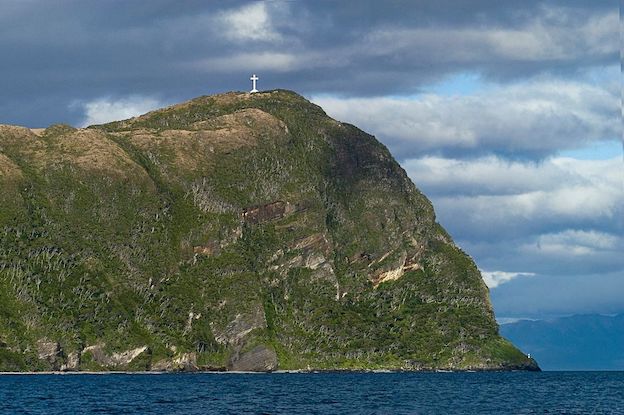
Cape Froward, Chile
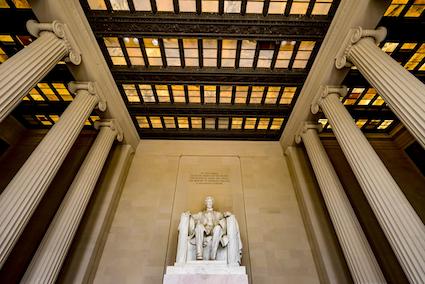
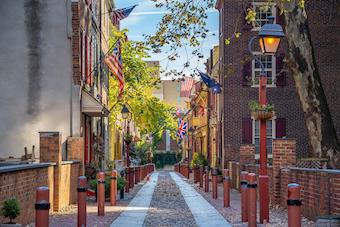


Welcome to the World’s Largest New Year’s Celebration
For those traveling from North, Central, or South America, New Year's Eve in Rio offers a rich narrative about how a city can transform a universal holiday into a unique celebration, rooted in local traditions and open to the world.











|
Experiences Finder
(Search our catalog of Experiences here.) |
|---|