|
Pan American Experiences
|
------- |


Colombia Related Articles: |
COLOMBIA ------------------------------------------1373[COLUMN] | |||
Colombia's Outgoing President Pursued a Climate Policy that Was Good for TourismBy Christopher Engholm for Ruta Pantera on 8/18/2026 1:11:24 PM |
||||
| There is one figure that captures better than any speech the magnitude of the gamble Gustavo Petro made. When he took office in 2022, oil and coal accounted for nearly one-fifth of Colombia’s government revenues, half of the country’s foreign investment, and almost one-tenth of its GDP. Deciding to reduce that dependence was not a symbolic gesture designed for a photo opportunity at a climate summit. In accounting terms, it meant stepping away from one of the pillars supporting Colombia’s public finances. And yet, he tried. | ||||
|
His administration stopped granting new oil and gas exploration contracts, a measure that would make Colombia the first major producing country to voluntarily halt the search for additional reserves, even as analysts estimated that, at current extraction rates, the country had only about seven years of proven reserves remaining before it would need to import what it currently exports. This was accompanied by a $40 billion investment plan aimed at financing the transition to clean energy sources, a figure that illustrates both the scale of the challenge and the difficulty of funding it in a country that does not have such resources readily available. Colombia’s energy picture is, in fact, more interesting than it appears at first glance. Nearly 80% of its electricity generation comes from renewable sources, primarily hydropower, a proportion that few countries in the world can claim. However, when looking at the broader energy matrix—including transportation, industry, and households—oil still accounts for 41%, natural gas 23%, and coal 11%, compared with only 12% from hydropower. The explanation lies in transportation, which alone consumes 43% of all energy used in the country. In other words, Colombia has a relatively clean electricity system built on an economy that still runs, quite literally, on internal combustion. That was precisely the knot Petro set out to untangle, and one that no previous administration had placed so clearly at the center of the national debate. On the forestry front, the numbers are even more striking. Using 2021 as a baseline year, when 174,103 hectares were deforested, the government reported a 36% reduction by 2023, bringing the figure down to 79,256 hectares—the lowest level recorded in 23 years. This was equivalent to saving an area nearly three times the size of Bucaramanga from chainsaws and land clearing. In the Colombian Amazon, the decline was even greater, reaching 38%. The cumulative balance between 2022 and 2024 showed a reduction of approximately 39–40% compared with the baseline, far exceeding the government’s official target of 20%. It is true that 2024 saw a rebound, with deforestation increasing again to just over 107,000 hectares, and several experts have warned that tensions in regions such as the Amazon remain unresolved. Yet even with that setback, the 2024 figure remained the second-lowest in the historical record. Few Colombian governments have been able to demonstrate such a sustained environmental trend over three consecutive years. That domestic work also became an international calling card. In April 2026, Colombia co-hosted with the Netherlands, in Santa Marta, the first international conference dedicated exclusively to a just transition away from fossil fuels, a subject that had failed to make its way into the final text of COP30 in Belém months earlier. Twenty-four countries endorsed the declaration that emerged from the process. The fact that a nation whose exports depend heavily on oil and coal chose to lead that discussion rather than obstruct it says something about the kind of political calculation Petro’s government was willing to make. Against that record, it is worth considering the contrast with the style of leadership that dominates much of the world today: leaders who manage only the short term, who protect established interests and patronage networks, and who rarely sacrifice even a single point of popularity for a cause that may not deliver results for twenty years. Petro risked real political capital—tax revenues, foreign investment, and the patience of entire economic sectors—for a project that offered no guarantee of immediate reward. One can legitimately debate whether the timing was right or whether stronger legal safeguards should have been enacted to ensure these reforms would outlast his administration. What the numbers do allow us to say is that this was not a cosmetic exercise. It was, despite its setbacks, one of the most serious efforts ever undertaken by an oil-producing country to imagine a future beyond oil. |
||||
 Add this article to your favorites
[FOR MEMBERS ONLY]
Add this article to your favorites
[FOR MEMBERS ONLY]
Copy this link to send this article to a friend: [FOR MEMBERS ONLY] |
||||
|
|
||||
|---|---|---|---|---|
| |
|
|
|
|
×
|
||||
Please leave a comment about this article: 1373 |
|
| Enter your email address: |
Your email will not be displayed. |
| Your nickname: | |
| Your comment: | |
| Was this article helpful to you? | |
|
|
|
Articles about exciting travel experiences in our hemisphere.
ADVENTURE
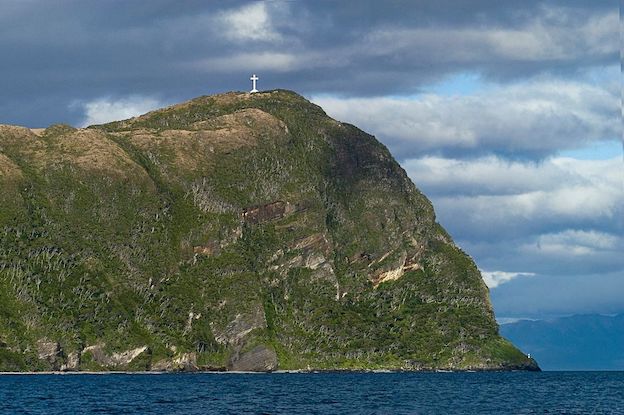
Cape Froward, Chile



BEACH & SUN

Welcome to the World’s Largest New Year’s Celebration
For those traveling from North, Central, or South America, New Year's Eve in Rio offers a rich narrative about how a city can transform a universal holiday into a unique celebration, rooted in local traditions and open to the world.















|
Experiences Finder
(Search our catalog of Experiences here.) |
|---|