|
Pan American Experiences
|
------- |


Americas Related Articles:
Pujol Crosses Borders: Mexico City's Jewel Arrives in New York City
Is supporting the dictatorship in El Salvador good for Central American tourism?
|
AMERICAS ------------------------------------------560[FEATURE] | |||
Does the Term "Hispanicity" Start a Narrative that Erases?By Jazmin Agudelo for Ruta Pantera on 10/21/2025 10:22:58 AM |
||||
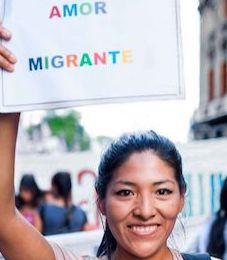
| October 12, 1492, marks the beginning of what many call “the encounter of two worlds.” For me, and for so many other migrant women, it was not an encounter but a collision. Columbus’s arrival unleashed centuries of colonization, dispossession, and violence that reshaped Latin America, leaving scars that still pulse within our communities. “Hispanicity,” promoted as a celebration of Spanish heritage, often overlooks these wounds. It is a narrative that exalts the language, religion, and culture of the colonizer while silencing the voices of the Indigenous, Afro-descendant, and mestizo peoples who resisted and survived. As a migrant, I have walked through cities where the term “Hispanic” labels me, as if my identity could be reduced to a language or a flag. In my experience, being “Hispanic” does not encompass the complexity of my heritage: the Aymara songs my grandmother used to sing, the markets where bartering is still alive, or the struggles of my ancestors against exploitation. Hispanicity, in its attempt to unify, devours these differences, imposing a narrative that privileges the European over the Indigenous, the white over the brown, the male over the female. In diasporas, where women like me rebuild our lives, this homogenization feels like a second colonization—one that erases our mother tongues and worldviews. A Journey of Resistance and Reinvention Migration is an act of courage, but also of rupture. I left my home seeking safety, opportunity, and a future for my children. Along the way, I faced language barriers, discrimination, and constant pressure to fit into a society that often views migrants as “others.” In this context, Hispanicity does not represent me; instead, it reminds me of the weight of a history that tried to erase my ancestors. Yet it has also taught me to value the plurality we carry within: migrant women are not a monolith. We are Quechua, Mapuche, Guaraní, Afro-Caribbean, mestiza—each with a unique story that defies uniformity. In diasporic communities, I have found strength in this diversity. At a cultural workshop in my adopted city, I met a Bolivian woman who weaves Aymara textiles with patterns that tell stories of resistance. I met a Colombian woman who hosts gatherings in her apartment where people speak Spanish—but also Wayuu. These women do not identify with Hispanicity; they celebrate their diverse roots, multiple languages, and distinct ways of seeing the world. Together, we create spaces where our identities are not consumed but celebrated. An Alternative to Forced Unity Hispanicity proposes a unity that, in its pursuit of cohesion, ignores the richness of our differences. As a migrant, I have learned that the true strength of our communities lies in heterogeneity. In Latin America, more than 600 Indigenous languages coexist with Spanish, each carrying a unique worldview. In the diaspora, these languages and cultures do not vanish—they transform. In my community, we organize festivals where Andean dances, Afro-descendant rhythms, and bilingual poetry come together. These spaces do not seek a “unity” that flattens our differences, but rather a coexistence that honors them. This plurality is also an act of resistance. Colonization attempted to erase our languages and cultures, but migrant women keep them alive. In my home, I teach my children words in Quechua alongside Spanish—not because I reject the colonizer’s language, but because I want them to embrace the fullness of their heritage. This small yet powerful act challenges the narrative of Hispanicity, which often reduces Latin American identity to one language and one story. | ||||
| Migrant Women As migrant women, we carry the weight of history but also the hope of redefining it. We are the guardians of our traditions, the weavers of new narratives. In the diaspora, we face unique challenges—racism, xenophobia, and the double burden of domestic and professional work. But we are also the ones building bridges. In my experience, I have seen women lead community initiatives: from collective kitchens serving Andean food to craft workshops preserving ancestral techniques. A powerful example is the movement of Indigenous migrant women in the United States, who have formed collectives such as Movimiento por la Justicia del Barrio in New York to defend their rights and make their cultures visible. These women do not celebrate Hispanicity; instead, they advocate for recognition of their multiple identities—from their languages to their spiritual practices. Their work inspires me to reject the idea of a homogeneous “Hispanic” identity and embrace the richness of our differences. The Challenges of Hispanicity in the Diaspora In the diaspora, the concept of Hispanicity is often used to group us under a single label, especially in countries like the United States, where “Hispanic” or “Latino” are omnipresent terms. But this categorization can be limiting. In my experience, being labeled “Hispanic” ignores my Indigenous heritage, my connection to the land, and my mother tongue. A 2023 Pew Research Center study found that 47% of Latin Americans in the U.S. prefer to identify with their country of origin or specific ethnicity, rather than generic terms like “Hispanic.” This reflects a rejection of homogenization and a desire to preserve cultural diversity. Moreover, Hispanicity sometimes reinforces hierarchies. In my community, I have seen how narratives that celebrate Spanish heritage marginalize Afro-descendant or Indigenous people, perpetuating colonial inequalities. As a migrant woman, I refuse to accept an identity that privileges one part of my story over another. I want my children to grow up knowing that their identity is a mosaic, not a straight line drawn from Spain. The Strength of Diversity Instead of Hispanicity, I propose a narrative of plurality. In the diaspora, we build communities where Indigenous languages, African rhythms, and mestizo traditions coexist. In my city, I take part in a collective that organizes bilingual poetry nights where Spanish mingles with Quechua and Portuguese. These initiatives not only preserve our cultures—they reinvent them, making them relevant for new generations. Plurality is not just resistance to the colonial past; it is a vision for the future. In a globalized world, migrant women are agents of change, weaving networks that connect continents and cultures. We reject the unity that devours and embrace the heterogeneity that enriches. As writer Gloria Anzaldúa said, “We are a people of many tongues, many stories, many lands.” That is the power of the diaspora—not a single voice, but a polyphonic chorus. As a migrant woman, my struggle is not only against the physical barriers of borders but also against narratives that attempt to reduce my identity to a label. Hispanicity, with its promise of unity, often ignores the richness of our differences, the depth of our languages, and the resilience of our communities. In the diaspora, I have learned that true unity does not come from erasing diversity but from celebrating it. Every step I take, every word I teach my children, is an act of resistance against homogenization. We are many, we are different, and in that plurality, we find our strength. Let October 12 not be a celebration of conquest, but a reminder that our voices, our languages, and our stories will continue to flourish—like the jungle that never yields to the storm. | ||||
 Add this article to your favorites
[FOR MEMBERS ONLY]
Add this article to your favorites
[FOR MEMBERS ONLY]
Copy this link to send this article to a friend: [FOR MEMBERS ONLY] |
||||
|
|
||||
|---|---|---|---|---|
| |
|
|
|
|
×
|
||||
Please leave a comment about this article: 560 |
|
| Enter your email address: |
Your email will not be displayed. |
| Your nickname: | |
| Your comment: | |
| Was this article helpful to you? | |
|
|
|
Articles about exciting travel experiences in our hemisphere.
ADVENTURE
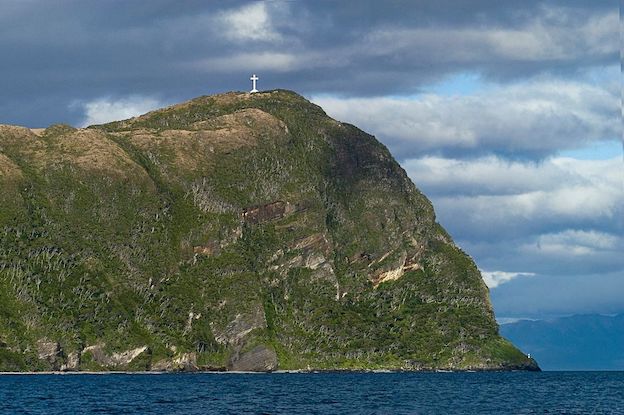
Cape Froward, Chile


BEACH & SUN

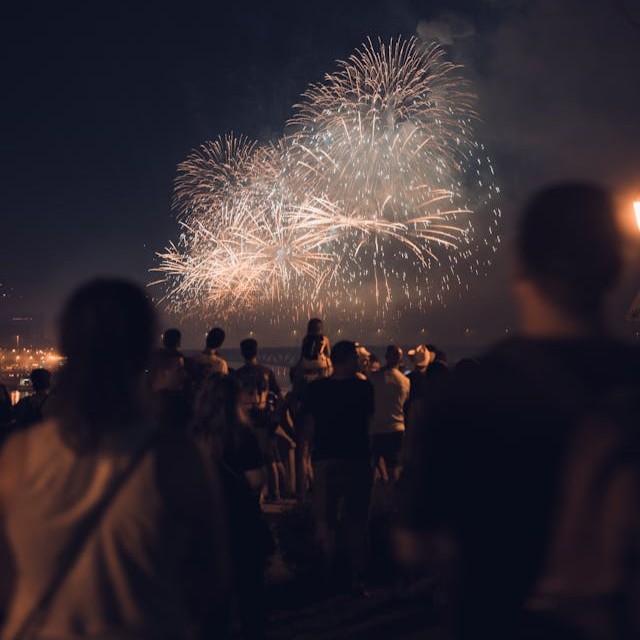
Welcome to the World’s Largest New Year’s Celebration
For those traveling from North, Central, or South America, New Year's Eve in Rio offers a rich narrative about how a city can transform a universal holiday into a unique celebration, rooted in local traditions and open to the world.











|
Experiences Finder
(Search our catalog of Experiences here.) |
|---|